
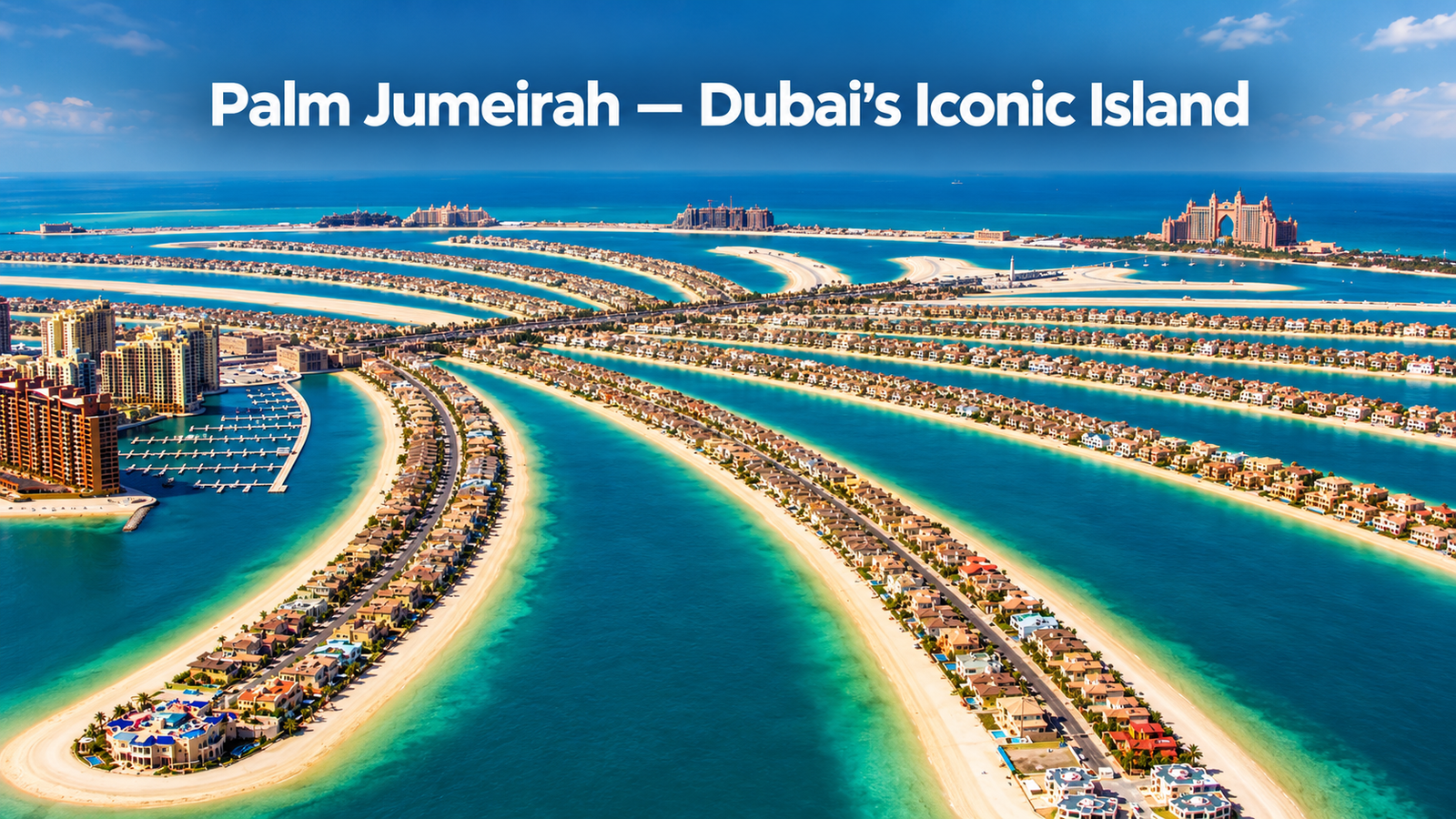
From the air, it looks almost too perfect to be real: a giant palm tree floating in the Arabian Gulf, its fronds stretching into the sea. Palm Jumeirah is one of the few places on earth where the shape of a destination is as famous as what happens inside it, and once you are standing on it, it is easy to understand why.
This is Dubai’s most recognizable island, home to some of the world’s most talked-about hotels, a record-breaking waterpark, Michelin-starred restaurants, and a stretch of coastline that did not exist twenty-five years ago. Whether you are visiting for a day, staying at one of its resorts, or simply curious about how it was built, this guide covers everything you need to know about Palm Jumeirah.
What Is Palm Jumeirah?
Palm Jumeirah is an artificial archipelago built off the coast of Dubai, shaped like a stylized palm tree surrounded by a crescent-shaped breakwater. It is one of the largest land reclamation projects ever completed, and today it functions as a mix of residential neighborhood, hotel district, and tourist attraction all at once.
The island sits just off Jumeirah, connected to the mainland by a bridge, with the Dubai Marina skyline visible across the water to one side and the open Gulf on the other. It has become so iconic that it appears on almost every postcard, skyline shot, and list of things to see in Dubai.
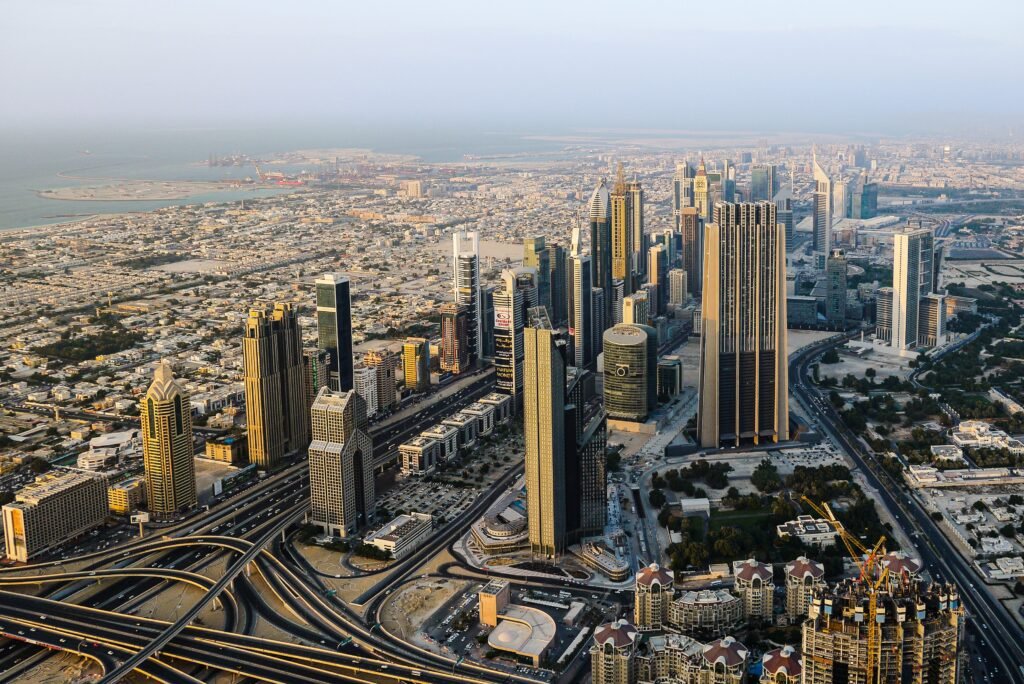
Palm Jumeirah was conceptualized in the late 1990s by Sheikh Mohammed bin Rashid Al Maktoum, with the goal of expanding Dubai’s limited coastline and creating a landmark that would put the city on the map. The developer behind the project was Nakheel, a real estate company now owned by the Government of Dubai, and the master plan was drawn up by the American architectural firm Helman Hurley Charvat Peacock.
Construction began in 2001. Millions of tonnes of sand were dredged from the floor of the Persian Gulf to build up the island’s shape, while the outer crescent, which absorbs the force of the open sea, was reinforced with rock and boulders brought in from the mainland. Land and basic infrastructure were largely complete by 2004, building construction began in 2006, and the first residents moved in during 2007.
The scale of the project earned Palm Jumeirah a Guinness World Record as the largest man-made island ever created, and it remains one of the most ambitious engineering projects of its era. For a deeper technical breakdown of the island’s history and structure, Britannica’s overview is a solid reference.
The Structure—Trunk, Fronds, and Crescent
Palm Jumeirah’s layout is divided into three main sections, and understanding them makes the island much easier to navigate.
The trunk is the broad base of the island, connected to the mainland by a bridge. This is where most of the apartments, retail spaces, and several hotels are located, and it also serves as the main entrance to the rest of the island.
The fronds are the 17 narrow extensions that branch out from a central spine, lined with closely spaced villas. Most of these are private residential areas, home to thousands of residents.
The crescent is the outer breakwater that curves around the fronds, nearly enclosing the island and protecting it from open sea currents. It is divided into sections to allow water circulation, and it is here that most of Palm Jumeirah’s famous resorts, including Atlantis, are located.
A monorail runs roughly 4.8 kilometers from the mainland, through the trunk and spine, out to the crescent, making it easy to move between sections without a car.
Top Things to Do on Palm Jumeirah
Palm Jumeirah packs an unusual amount of variety into a relatively small area. Here is what the island is actually known for.
Atlantis, The Palm, and Atlantis The Royal
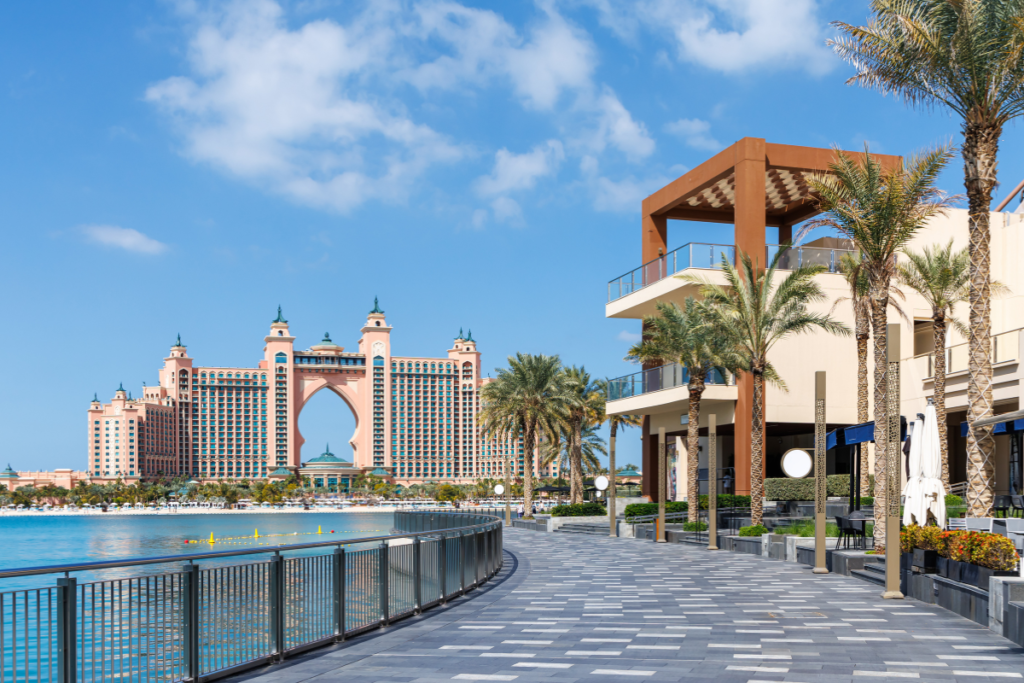
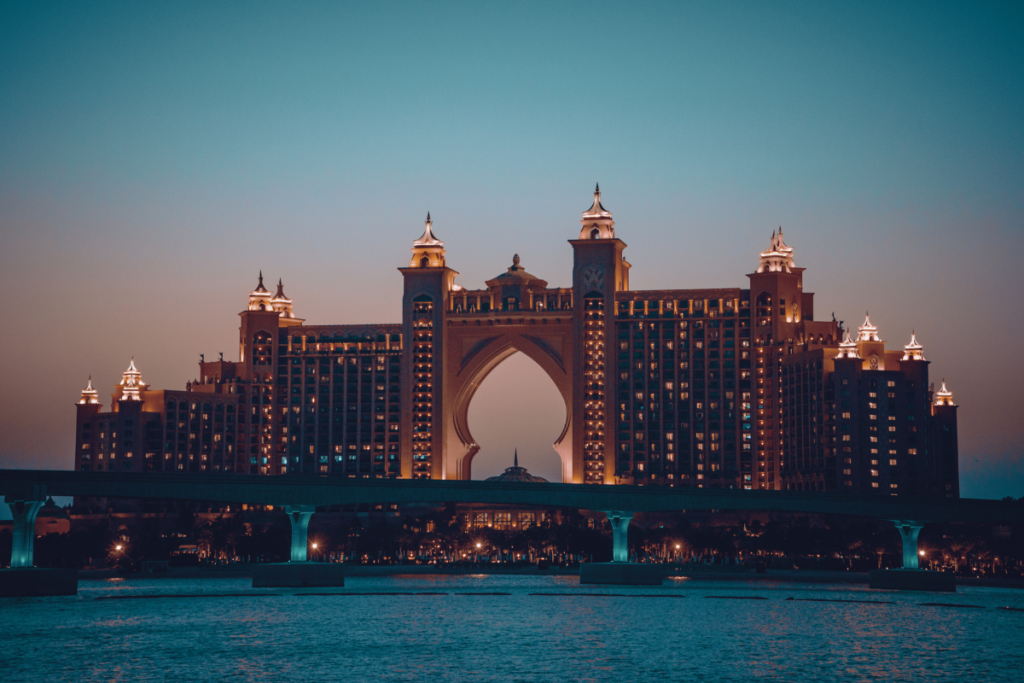
Atlantis, the Palm, anchors the tip of the crescent and has been one of Dubai’s most photographed landmarks since it opened in 2008. It functions less like a single hotel and more like a full entertainment destination, with its own aquarium, waterpark, and a long list of restaurants. Atlantis The Royal, its newer neighbor, has become known for having one of the highest concentrations of celebrity-chef restaurants anywhere in the world.
Aquaventure Waterpark
Part of the Atlantis complex, Aquaventure is consistently ranked among the largest waterparks on earth. It combines high-speed slides with a private beach area, making it a popular full-day stop for families and thrill-seekers alike.
The Lost Chambers Aquarium
Also inside Atlantis, this aquarium is built around the myth of the lost city of Atlantis, with underwater tunnels, marine life displays, and a dramatically themed setting that makes it feel more like an exhibit than a typical aquarium visit.
The View at The Palm and AURA Skypool
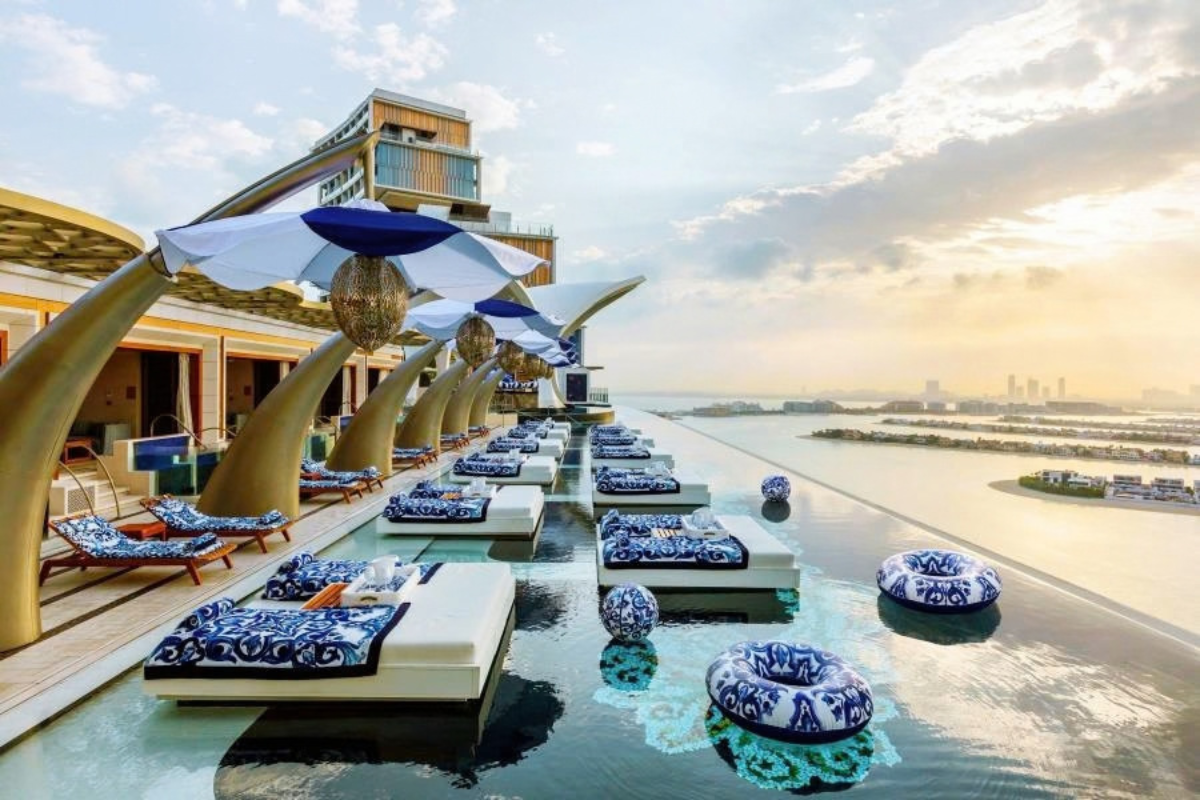
Sitting on the 52nd floor of The Palm Tower, The View at The Palm is an observation deck offering 360-degree panoramas over the island, the coastline, and the Dubai skyline. It remains the only vantage point that lets visitors genuinely appreciate the full palm-tree shape of the island from above. One floor below, AURA Skypool holds the title of the world’s highest 360-degree infinity pool, suspended roughly 200 meters above the island.
Palm Jumeirah Mall (formerly Nakheel Mall)
Located at the base of the island near the trunk, Palm Jumeirah Mall is the island’s main shopping and entertainment hub, with more than 300 stores, a cinema, and a wide range of dining options. It is generally far less crowded than Dubai’s larger malls, which makes it a relaxed stop before or after other activities.
Palm West Beach
One of the newer additions to the island, Palm West Beach is a public beachfront stretch along one of the fronds, lined with cafes, restaurants, and open stretches of sand. It has quickly become a popular spot for a relaxed beach day without needing a hotel booking.
Palm Jumeirah Boardwalk
Stretching roughly 11 kilometers from one end of the crescent to the other, the boardwalk is one of the best free things to do on the island. It offers walking paths with sea views, food trucks, and casual bites like shawarma stands dotted along the route. On a clear day, it also offers distant views of the sail-shaped Burj Al Arab across the water, and it is just as popular with cyclists as it is with walkers.
Beach Clubs and Nightlife
Several of Palm Jumeirah’s resorts run beach clubs that double as daytime lounges and nighttime venues, often featuring spa treatments, infinity pools, and live DJ sets once the sun goes down. These clubs have become a significant part of the island’s appeal for visitors looking for more than just sightseeing.
Michelin Dining
Palm Jumeirah has quietly become one of the strongest fine-dining destinations in the region, home to several Michelin-starred restaurants spread across its resorts, covering everything from contemporary European cuisine to modern Japanese-Peruvian fusion.
Watersports and Skydiving
The island’s calm waters and open coastline make it a popular spot for stand-up paddleboarding, kayaking, and jet skiing, while Skydive Dubai offers tandem jumps that descend directly over the island, giving a genuinely unique view of its shape from the air.
How to Reach Palm Jumeirah
By monorail: The Palm Monorail connects Palm Gateway at the base of the trunk to Atlantis, The Palm at the crescent, making several stops along the way, including Nakheel Mall. It is the easiest way to move across the island once you arrive.
By metro: Palm Jumeirah does not have its own metro station directly on the island, but the nearest Dubai Metro stations connect to the area via taxi or feeder bus, with onward travel typically completed by road or the Palm Monorail.
By road: A well-developed network of roads connects the trunk, fronds, and crescent to the mainland, and taxis are readily available throughout the island.
By water taxi: Water taxis offer a scenic alternative, giving a different perspective of the island’s shape and architecture from the water itself.
From Dubai International Airport: The drive from the airport to Palm Jumeirah typically takes around 45 minutes by taxi or car, depending on traffic, making it an easy add-on to a wider Dubai itinerary rather than a separate trip.
Where to Stay—Palm Jumeirah Hotels
Palm Jumeirah is home to one of the densest clusters of luxury hotels in Dubai, and most of them sit either on the crescent, facing the open Gulf, or along the trunk, closer to the mainland and the mall. The right pick usually comes down to how central you want to be versus how much quiet beachfront space you want around you.
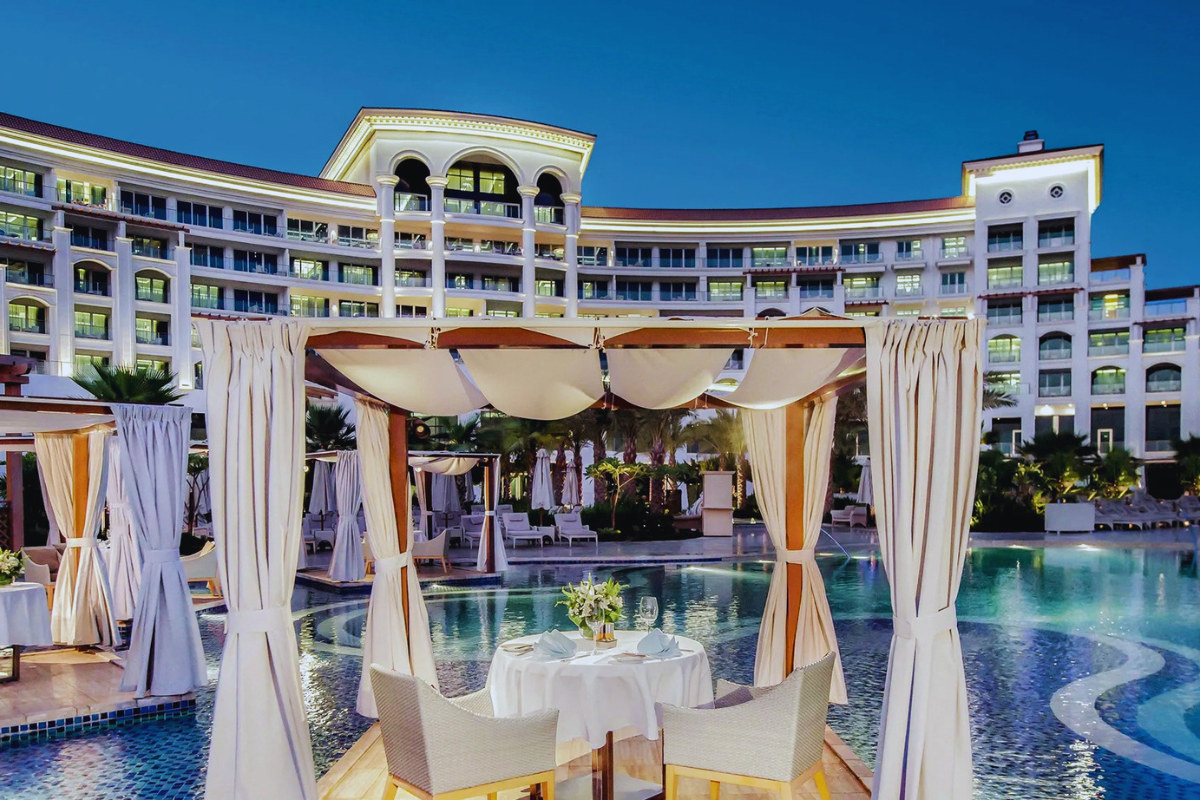
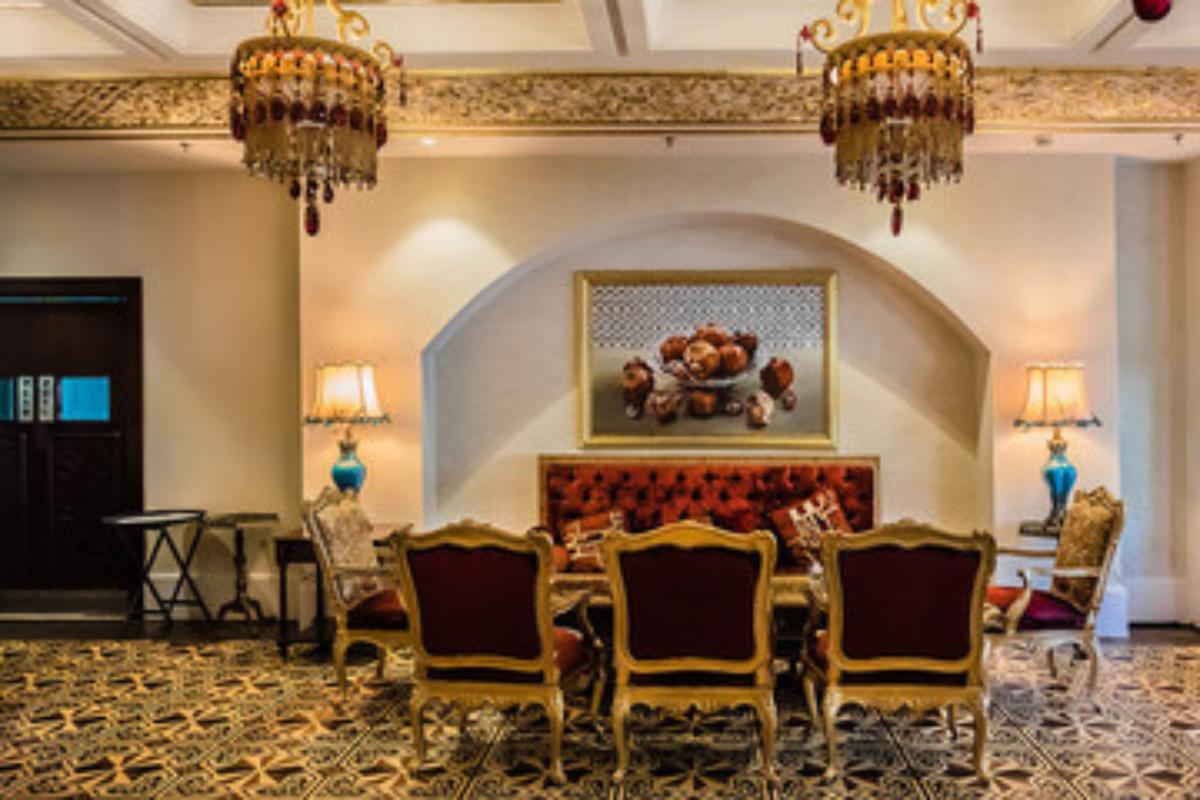
Waldorf Astoria Dubai Palm Jumeirah
A more classic, understated take on luxury compared to Atlantis’s scale. The Waldorf Astoria sits on the crescent with direct beach access, a calmer atmosphere, and a design that favors traditional elegance over spectacle. It tends to suit travelers who want a quieter resort experience without giving up a prime beachfront location.
Hilton Dubai Palm Jumeirah
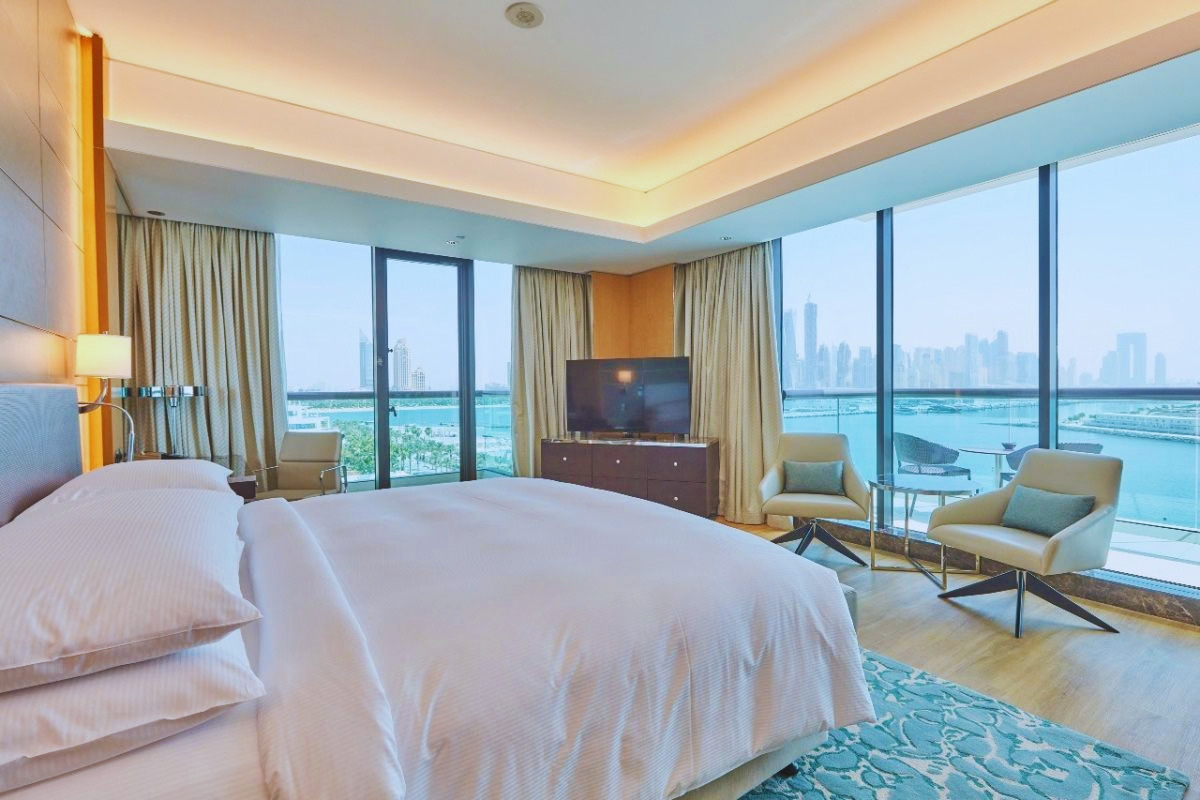
A well-located option on the beachfront that sits a notch below the island’s flagship resorts in price while still offering direct beach access and solid amenities. It is a common pick for travelers who want a Palm Jumeirah address without paying Atlantis-level rates.
Jumeirah Zabeel Saray
Known for its elaborate Ottoman-inspired interiors, extensive spa facilities, and a quieter position toward the end of a frond rather than the busier crescent tip. It is a strong choice for guests prioritizing spa time and a more residential, low-key feel.
FIVE Palm Jumeirah Hotel
Geared toward a younger, nightlife-driven crowd, FIVE is known for its lively pool scene, beach club, and a more energetic atmosphere than most of the island’s other resorts. It suits travelers looking for a social, party-adjacent stay over a quiet beach escape.
Beyond these flagship names, the island also has a growing number of serviced apartments and shorter-stay rentals, particularly on the trunk, which tend to be more affordable than the resort properties on the crescent, though options remain limited compared to mainland Dubai.
Palm Jumeirah Hotels — Quick Comparison
| Hotel | Location on Island | Typical Price Range (AED/night) | Best For |
|---|---|---|---|
| Atlantis, The Palm | Crescent (tip) | 1,500 – 3,500 | Families, waterpark access |
| Atlantis The Royal | Crescent (tip) | 3,000 – 7,000+ | Couples, luxury dining |
| Waldorf Astoria Dubai Palm Jumeirah | Crescent | 1,800 – 3,500 | Quiet luxury, classic style |
| Hilton Dubai Palm Jumeirah | Crescent (beachfront) | 900 – 1,800 | Value beachfront stay |
| Jumeirah Zabeel Saray | Frond | 1,500 – 3,000 | Spa-focused, quieter stay |
| FIVE Palm Jumeirah Hotel | Crescent | 1,200 – 2,500 | Nightlife, pool and beach club scene |
| Serviced apartments (trunk area) | Trunk | 400 – 1,000 | Budget-conscious, longer stays |
Prices shift significantly by season, with peak winter months (December to February) generally running highest and summer offering the most noticeable discounts. These figures are a general guide rather than live rates, so checking directly with each hotel or a booking platform closer to your travel dates is recommended.
Palm Jumeirah Real Estate — Property and Cost Guide
Palm Jumeirah is one of Dubai’s most sought-after residential addresses, and property here spans everything from apartments on the trunk to multi-million dirham villas on the fronds.
Generally speaking, apartments on the trunk and spine tend to be the most accessible entry point into the island’s property market, while villas on the fronds, especially those with private beach frontage, sit at the higher end. Prices vary significantly based on frond location, plot size, sea view, and proximity to landmarks like Atlantis or the mall, so figures should always be checked against current listings rather than treated as fixed.
This guide is intended as general informational background rather than a live property listing service. For current pricing and availability, checking directly with a licensed real estate platform or agent is recommended.
Best Time to Visit Palm Jumeirah
The cooler months, roughly October through April, are the most comfortable for spending time outdoors on the island, whether that means the beach, the boardwalk, or Aquaventure. Weekday visits tend to be quieter than weekends, and arriving earlier in the day helps you beat both the heat and the crowds at major attractions like The View or Aquaventure.
Tips for First-Time Visitors
- Wear comfortable shoes if you plan to explore the boardwalk or walk between attractions
- Book tickets for The View or Aquaventure in advance during peak season to avoid long queues
- The monorail is the easiest way to move across the island without a car
- Sunset is one of the best times to visit the boardwalk or a beach club for views toward Burj Al Arab
- If visiting in summer, plan outdoor activities for morning or evening to avoid peak heat
Frequently Asked Questions
Is Palm Jumeirah free to enter?
Yes, the island itself is open to the public and free to visit. Specific attractions inside it, such as Aquaventure Waterpark or The View at The Palm, charge separate admission.
What is Palm Jumeirah known for?
Palm Jumeirah is best known for its distinctive palm-tree shape, its status as the world’s largest man-made island, and landmark resorts like Atlantis, The Palm, along with its beaches, Michelin-starred dining, and luxury residential villas.
Is Palm Jumeirah open to the public?
Yes, the island is a public area with free access to its roads, boardwalk, and public beaches, while hotels, beach clubs, and attractions may have their own entry requirements.
How expensive is Palm Jumeirah?
Costs vary widely depending on what you are doing. A day at the public beach or boardwalk can cost nothing beyond food and transport, while staying at a flagship resort or dining at a Michelin-starred restaurant sits at the premium end of Dubai’s pricing.
When was Palm Jumeirah built?
Construction began in 2001, with land and infrastructure largely complete by 2004, building construction starting in 2006, and the first residents arriving in 2007.
How do I reach Palm Jumeirah by metro?
There is no direct metro station on the island itself. Visitors typically take the Dubai Metro to a nearby station and continue by taxi, feeder transport, or road to reach the island, then use the Palm Monorail or taxis to get around once there.
How much does a house cost on Palm Jumeirah?
Property prices vary significantly based on location on the island, villa size, and sea frontage, with fronds and beachfront villas generally commanding higher prices than trunk-area apartments. Current listings through a licensed agent are the most reliable way to check up-to-date figures.
Is Palm Jumeirah walkable?
Yes, particularly along the 11-kilometer boardwalk that runs along the crescent. Walking between the trunk and crescent attractions is less practical given the distance, which is where the monorail or a short taxi ride becomes useful.
How do you get around Palm Jumeirah once you are there?
On foot or by bike along the boardwalk, by monorail between the trunk and crescent, or by taxi for longer distances across the island. Most visitors end up combining two or three of these depending on how much ground they want to cover in a day.
Is it worth visiting Palm Jumeirah?
For most visitors, yes, particularly for the beaches, The View at The Palm, and the Atlantis attractions. The main trade-off worth knowing about in advance is that budget and mid-range hotel options are limited compared to other parts of Dubai, and the island’s layout means it can feel somewhat removed from the city center, so it suits a dedicated visit rather than a quick stopover.
Is there a dress code on Palm Jumeirah?
There is no strict dress code for the public areas, beach, or boardwalk, though modest clothing is generally appropriate outside the beach itself. Individual restaurants, beach clubs, and hotels may have their own dress requirements, particularly in the evening.
Final Thoughts
Few destinations manage to be a feat of engineering, a luxury resort district, and a genuine tourist attraction all at once, but Palm Jumeirah pulls it off. Whether you come for a single afternoon at the beach or a multi-day stay at one of its resorts, it is one of those places in Dubai that lives up to the hype once you actually see it in person.
If you are planning a wider Dubai itinerary, our Global Village Dubai guide and Desert Safari Dubai guide cover two more experiences worth building into your trip. For the Downtown skyline, see our Burj Khalifa tickets price guide for decks, prices and the best time to go.
For an evening on the water after a day on the island, see our Dubai Marina dhow cruise guide for dinner cruise prices, timings and the best boats to book.

The Dubai Tours and Safari editorial team researches and updates our Dubai and UAE travel guides, checking prices, timings and facts against official sources.
Comments (2)